











LATEST ARTICLES

Talent and gender diversity in the rail sector

Guest writer Adam Razzell, head of transport and infrastructure at Advance Resource Managers, reflects on the diversity of talent in the rail industry and questions whether more needs to be done.


With an average staff turnover rate of just three percent (compared with the UK median rate of 13.6 percent), the UK’s rail sector has less experience than most of dealing with skills gaps – but its landscape is changing quickly.

An ideal time for reflection

Due to retirement alone, the industry is expected to lose as many as 50,000 workers by 2033 (from a total of around 240,000), most from operative roles. The futures of a further 15 percent – the workforce’s EU nationals – also remain uncertain because of Brexit.

Then there’s rising demand from passengers (in contrast with falling interest in bus and coach travel) and plans for a new era of high-speed rail infrastructure to create the need for even more staff.

As UK rail looks to steady itself for the future using a range of recruitment and training initiatives, we find ourselves at an ideal point to take stock of its current talent, and the diversity of that talent. Does its recruitment approach need to change drastically for a more secure future, or is it on the right track already?

A general snapshot of rail talent

According to Department for Transport data from December 2019, around 240,000 people work in the UK rail sector – 67.8 percent for rail infrastructure firms and 25.4 percent for train operators, the two biggest categories.

With salaries ranging from £16,000 up to £71,000, the average rail worker earns just over £35,500 per year, although this rises to £39,000 in London and falls just short of £32,000 in Scotland. Average salaries in all other areas of the UK sit between these two figures, meaning all are above the wider national median salary of £30,300.

Given rail’s low staff turnover rate, it’s unsurprising that almost two-thirds (63 per cent) of its workers have eight or more years of experience in their roles. Sixteen percent have between four and seven years of experience, and 20 percent have three years or less. And, while this implies that a retirement surge could cause serious issues, the amount of experience currently present in the sector does bode well for the Strategic Transport Apprenticeship Taskforce (STAT), a body set up in 2016 to address skills gaps and increase diversity across UK transport using apprenticeship programmes.

Gender representation in rail

The rail sector cannot avoid major skills shortage without diversifying its workforce – that’s something that Mike Brown, the recently departed Transport for London Commissioner and STAT chair, implied in STAT’s latest update report.

“A skilled workforce is vital to future economic success,” he said. “Quality training at all levels is fundamental and we need to broaden our talent pipeline if we are to drive productivity and innovation across the transport sector.”

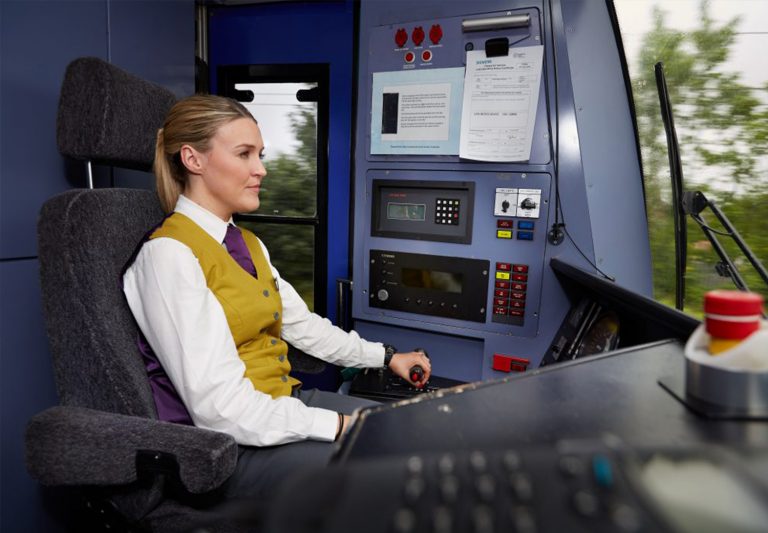
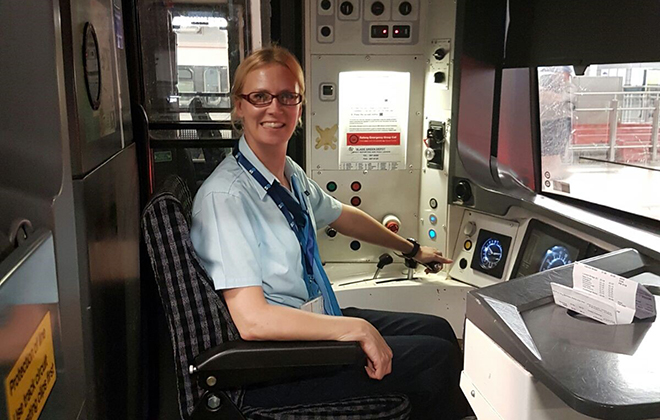
Right now, the data shows a huge imbalance. Of its quarter-million employees (including those working in passenger services, freight operations and the wider supply chain), only 17 per cent are female. That falls to 13 per cent in the commercial rail workforce, and again to 12 per cent in signalling and design – both areas with significantly higher average salaries (£45,800 and £37,900 respectively).
%%tb-image-alt-text%%
Both photo credits: Southeastern.

Some companies and regions are more diverse than others. Network Rail – by far the sector’s biggest employer – TFL and Southern Railway hold the most female talent, while London and the South East lead the list of regions. But more needs to be done.

What’s positive is that we are seeing action from some of the sector’s biggest operators. Southeastern and East Midlands Trains, for example, recently introduced anonymous candidate screening and targeted advertising campaigns in attempts to encourage more women to become train drivers. Southeastern is aiming for 40 percent of applicants for driver roles to be women by 2021 (from 4.5 percent in 2019), and East Midlands has already seen the number of female applicants double.

But skills gaps and underrepresentation aren’t challenges that employers can address individually – there needs to be an industry-wide shift. And, as the seemingly inevitable skills gap inches closer, it must happen quickly.
Lewes derailment: investigation continues

The investigation into yesterday’s train derailment near Lewes is continuing, with specialist teams assessing damage to the railway infrastructure and the Rail Accident Investigation Branch (RAIB) working to establish what caused the incident.

A Southern service from London Victoria to Eastbourne derailed just north of Lewes station at approximately 3.55pm on 13 August. Three carriages came off the track and tipped onto their sides, with more than 100 passengers on board. Emergency responders evacuated those on the train.

Two passengers sustained serious injuries and remain in hospital, although British Transport Police (BTP) has confirmed that their injuries are not considered life-threatening. A further 18 people were taken to hospital with less serious injuries following the incident, but all have since been discharged.

Network Rail has deployed specialist teams to assess the condition of the railway infrastructure following the derailment. The extent of the damage and the work required to restore the railway are still being assessed.

Rail services between Lewes, London, Brighton and Eastbourne remain subject to major disruption, with no indication yet of when normal services will resume.

The focus of the investigation is now on establishing what happened rather than speculating on the cause. Network Rail has said it would not be appropriate to comment on the cause while the RAIB conducts its investigation.

The Office of Rail and Road (ORR) has also confirmed that its investigation is under way. HM Chief Inspector of Railways Richard Hines said the regulator’s priority was to understand what happened, ensure risks were properly addressed and identify lessons that could be acted upon across the industry.

Hines also highlighted the response of railway staff, emergency services, and members of the public, whose actions helped passengers following what he described as a deeply distressing incident. He stressed the importance of relying on evidence rather than speculation while the investigation progresses.

BTP officers remain at the scene and are supporting RAIB inspectors with their enquiries. The force expects a continued police presence in the area over the coming days.

BTP is also appealing to anyone who was travelling on the derailed train and has not yet spoken to officers to come forward. The force said some passengers left the area after being evacuated and took alternative routes home and is seeking to speak to those who have not yet provided information.

Image credit: iStockphoto.com

Eurostar introduces first ERTMS-equipped e300 train into service following ERA approval

Eurostar has received authorisation from the European Union Agency for Railways (ERA) to bring the first e300 train fitted with the ERTMS/ETCS onboard system into service. The first commercial journey of an ERTMS-equipped e300 train took place on Friday July 17th 2026.

The authorisation, which came on 6 July, marks a major milestone in the modernisation of Eurostar’s historic fleet, bringing it in line with the highest European standards for safety and interoperability.

The programme to modernise eight e300 trains will complete the installation of the ERTMS/ETCS onboard system across Eurostar’s entire fleet. It will support the continuity and performance of operations in the medium term by extending the service life of the trains and improving interoperability, as demand for international rail travel continues to grow and railway systems across Europe become increasingly harmonised. As ERTMS continues to be rolled out across Europe, it now covers a large proportion of the network operated by Eurostar.

The authorisation follows a rigorous process centred on the conversion of a prototype train, which successfully completed static and dynamic testing in partnership with MASTERIS, SNCB and SNCF Voyageurs Matériel.

With this milestone, the programme enters its final phase before the gradual introduction into commercial service of the modernised e300 fleet. The programme will now accelerate, with an optimised approach that maintains commercial capacity by taking only one trainset out of service at a time.

Integrating ERTMS onto the e300 fleet has been a significant technical undertaking. The project has drawn on the combined expertise of Eurostar’s engineering teams and industrial partners to adapt safety-critical technology to existing rolling stock, within a constrained environment and for trains operating at speeds of more than 300 km/h.

Following this approval, Eurostar is now moving into the series production phase. Industrial work is being carried out at SNCB workshops in Namur, where the first modifications are already under way, marking the project’s transition into large-scale deployment.

Zelda Crambert, director of rolling stock at Eurostar, said: “Securing this authorisation reflects our ongoing commitment to safety, European interoperability and the performance of our fleet. By equipping 100% of its fleet with ERTMS signalling, Eurostar is fulfilling its pioneering role as a backbone of European rail. We would like to thank all of our partners for their contribution to this complex and strategically important project.”

The e300 modernisation programme forms part of Eurostar’s wider industrial roadmap and will support the fleet’s transition to the new Celestia trains, which are scheduled to enter service from 2031.

The new fleet will comprise up to 50 Avelia Horizon trains manufactured by Alstom, representing a €2 billion investment by Eurostar.

Image credit: Eurostar

Train companies and police ramp up efforts to keep public safe through summer

Rail companies and the British Transport Police have stepped up visible patrols and measures to protect the travelling public during a ‘week of action’ in August as emerges that incidents of trespassing and anti-social behaviour the railway have risen by up to 39% in just six months.

Anti-social behaviour incidents on the railway in Sussex and south London increased by 29% in July and August 2025, with the total number of incidents increasing by 39% compared with November and December.

These included 398 incidents over July and August 2025 with 203 separate trespassing incidents and 33 anti-social behaviour incidents.

On the first day of action, Monday 10 August, British Transport Police officers apprehended a cable thief following a cable theft back in June. With the help of Network Rail staff and station CCTV, officers were able to identify him and make an arrest after he was seen walking through the station.

To reduce incidents that disrupt the railway, and to keep people safe, a £2.5 million investment in Travel Safe Officers by GTR as part of its Anti-Social Behaviour Improvement Plan will help deter crime, support railway staff and reassure passengers, with their visible presence complementing the work of frontline teams and the British Transport Police.

A range of other measures being ramped up this week to keep people safe across the railway in Sussex and south London includes:

  • Patrolling the railway at key hotspots on the network known for anti-social behaviour and crime.
  • Building awareness of how people can report trespass and concern for welfare incidents.
  • Having conversations with members of the public about action that they could take if they saw a trespasser or vulnerable person.
  • Using drones to identify people misusing and trespassing on the railway.

Paul Langley, Network Rail’s head of security, crime and resilience, said: “Trespass and concern for welfare incidents are among the biggest causes of delays across our route and our priority is always to keep people safe while minimising disruption to customers.

“That’s why alongside our industry partners, we will be focusing our activity at certain stations each day this week, making targeted interventions to help deter incidents. These interventions will aim to improve the safety of everyone who travels on our railway and make but making the railway more reliable for our customers.”

Mike Boyce, GTR’s head of security and policing, said: “This week of action exemplifies the work we do every day in close partnership with our colleagues at the BTP, Network Rail and other organisations up and down our huge network.

“All of our passengers and staff should be safe and, importantly, feel safe when they travel and use our stations. We’ve undertaken a lot of work to bolster our existing security presence including doubling the headcount of our Travel Safe Officers, improved information sharing with partners like the Brighton Crime Reduction Partnership, and updated our incident reporting app – Zero Harm – to gather better intelligence on where our resources are most needed.”

The week of action is part of a co-ordinated effort and follows the release in July of a new campaign from the rail industry that reminds the public of the fatal risks of trespassing on the railway as it launches a new phase of its ‘No Second Chances’ safety campaign. 

Research shows that people severely underestimate the dangers of trespassing on the railway. This includes entering the railway to retrieve dropped items, crossing the tracks to save time on a journey, or even standing too close to the line.   

Across Britain, there were more than 19,000 recorded trespass incidents on the railway in 2024/25, resulting in 19 accidental fatalities and 85 people being seriously injured. 

Someone who experienced the danger first hand is Dinusha Ilanperuma from Surrey. Ten years ago, aged just 15, Dinusha stepped onto the tracks to retrieve one of her shoes when coming home from a party with friends. As she climbed back onto the platform, she slipped, making contact with the electrified rail.  

Dinusha was electrocuted and suffered catastrophic injuries as a result. She was rushed to hospital and underwent skin grafts for the third degree burns on her left arm, back and foot. Dinusha spent two weeks in hospital and had to learn to use her arm again due to suffering extensive nerve damage. 

A decade on, Dinusha wants to help raise awareness of the dangers of trespassing on the railway to help other people to stay safe.  

Dinusha said: “I’m lucky to be alive. I still have the scars from that night, and it so easily could have been much worse.

“My friends had to watch as I was electrocuted. When I woke up in the hospital, people told me they could smell the burnt flesh on my skin. It was horrible hearing that. I don’t want anyone to ever have to experience what I went through.

“I want people to stop and think. To realise the dangers of trespassing on the railway. To ask themselves: is that really worth risking my life over?”

As part of the campaign Network Rail is issuing a toolkit across the rail industry to help raise public awareness of the dangers of trespassing.  

The campaign also forms part of a wider rail industry commitment to reducing unsafe behaviour around the railway. It comes ahead of the introduction of statutory rail safety education in schools in England from September 2026.  

Resources are available for younger people on Network Rail’s ‘Switched On’ website, including educational videos, classroom posters, and learning posters.  

Image credit: Network Rail

HS2 reveals completed high-speed platforms at Old Oak Common station

HS2 has unveiled its first six completed platforms on the railway in the underground station box at Old Oak Common in west London.

The underground platforms will be served by HS2’s fleet of new high-speed trains, taking passengers between the capital and the West Midlands, as well as destinations further north via the West Coast Main Line.

HS2’s station construction partner Balfour Beatty Vinci SYSTRA (BBVS) oversaw the work to construct the platforms from its sub-contractor Expanded, which began in April 2025.

Work began by building 1.59-metre-high walls, known as invert walls. These were cast in situ on site before the pre-cast platform slabs, manufactured by Explore in Worksop, East Midlands, were lifted and secured on top. In total there are 1,946 slabs, each measuring up to 2 metres by 4 metres and weighing between four and five tonnes.

The team built the platforms concurrently from each end, before meeting in the middle in a formation of three island-style blocks. The platforms have a void below, allowing for services, such as electricity to be installed underneath.

Further fit out work on the platforms will now take place, including the construction of staff and equipment rooms. On the platforms, steelwork for lifts and escalator installation will begin, and floor finishes will be fitted once the other elements have been completed.

In addition to the six high speed platforms, eight further platforms will be built at ground-level at Old Oak Common, being served by the Elizabeth line, Great Western Mainline and Heathrow Express services. Old Oak Common will be the 42nd stop on London’s Elizabeth line and will be one of the UK’s best-connected stations with trains reaching over 100 destinations.

Kim Kapur, HS2’s Old Oak Common area director, said: “Going into the underground box at Old Oak Common, you can immediately visualise how it will look as an operational station, including where passengers will board or alight HS2’s brand new trains. The scale of the work – and the station now taking shape – is remarkable.

“However, there is much more to do. This includes construction of the conventional, surface level platforms, completion of tunnels either side of the underground box and installation of the impressive station roof, which will begin next year.

“Old Oak Common will be transformative for the local area, providing a new transport hub, with a new vibrant neighbourhood developing around it.”

Steve O’Sullivan, project director at Balfour Beatty VINCI SYSTRA joint venture, commented: “This achievement reflects the expertise of our multidisciplinary teams who have worked collaboratively to deliver one of the most technically challenging stations currently being built in the UK, drawing on world-class engineering, specialist knowledge and a shared commitment to excellence.

“As the full scale, form and function of the station is starting to come into view there is a tremendous sense of pride in what has been accomplished so far to transform an ambitious design into a functioning transport hub, with our focus now on progressing works into the next phase.”

Image credit: HS2

RailStaff Awards 2026: a star host for rail’s biggest celebration

The countdown to the RailStaff Awards 2026 has officially started and there’s not long to wait before the industry comes together for its biggest celebration.

On Thursday 26 November, Birmingham’s NEC will welcome rail professionals from across the country for an evening dedicated to recognising the inspirational individuals and teams who make our network great.

Of course, the nominees and winners will be the stars of the show. But an awards night is nothing without the people who help to steer the proceedings.

Credit: JM Poilpre CC BY-SA 4.0

So, it’s time to meet the person who’ll play a starring role on the night, and we’re thrilled to announce that your host for the evening will be all-round entertainer Denise van Outen!

All round entertainer

TV presenter, actress, singer, and broadcaster Denise is a familiar face on UK screens, known for bringing warmth, humour, and infectious energy to the UK’s best-loved shows.

She has enjoyed a varied career spanning television, theatre, music and radio. She first came to national attention as a presenter on Channel 4’s The Big Breakfast, where her lively partnership with Johnny Vaughan made her a household name in the late 1990s.

Denise went on to build a successful acting career, appearing on both stage and screen, including acclaimed performances as Roxie Hart in Chicago in London’s West End and on Broadway. She also starred in Andrew Lloyd Webber’s Tell Me on a Sunday and has appeared in productions including Legally Blonde and Rent Remixed.

Away from acting, Denise has presented numerous television and radio programmes, served as a judge on shows including Ireland’s Got Talent, and competed on Strictly Come Dancing, where she reached the final and finished as runner-up. More recently, she has continued to work across television, theatre and broadcasting, maintaining her status as one of the UK’s best-known entertainers.

We can’t wait to welcome her to the stage at the NEC Birmingham on Thursday 26 November.

Time to nominate

Nominations are open across 20 categories, and we encourage everyone in the industry to think about colleagues who deserve recognition.

When preparing a nomination, think about the qualities that make your colleague stand out and include specific examples that demonstrate their contribution. Explaining what happened, when it took place, and the difference it made will help the judges understand why your nominee deserves recognition.

Submitting a nomination is free and only takes a few minutes, but it could become one of the most meaningful acknowledgements a colleague ever receives.

Before submitting, remember to obtain approval from the nominee’s manager or director and include a recent photograph.

Nominate now!

Support the railway’s stars

More than just a ceremony, the RaiStaff Awards are an experience – an evening that combines recognition with celebration and brings colleagues together for a memorable and meaningful occasion.

This unforgettable night wouldn’t be possible without the support of the industry. As ever, there are a range of exciting sponsorship opportunities available – a chance to showcase your brand while supporting the heroes of rail.

Make your mark on rail’s biggest night – visit our website to discover how you can get involved.

Don’t miss out!

The clock is ticking but there’s still time to book a table or a ticket.

Tables are available for reservation at: www.railstaffawards.com

[USE LINK: https://railstaffawards.com/RSA26/en/page/tickets]

To enquire about single tickets, please contact us directly on 01530 816456 or email [email protected]

Don’t leave it too late – we’d hate for you to miss out on a fabulous night of celebration.

Key Dates

Nominations Open | Now – 6 September 2026

Public Voting | 14 – 27 September 2026

Judging Period | 1 – 16 October

Finalists Announced | 30 September 2026

Ticket & Table Bookings

Standard Bookings | Now – 13 November 2026

Ceremony

Date: Thursday 26 November 2026

Location: Hall 1, NEC, Birmingham

AtkinsRéalis appointed to TfL’s Professional Services Framework

AtkinsRéalis has been named on six of the seven lots on Transport for London’s (TfL) Professional Services Framework 3 (PSF3), making it one of the most broadly appointed suppliers on the framework.

The three-year framework will support TfL to plan and deliver major investment and renewal programmes across London’s transport network – including trains, buses and road infrastructure – with an option to extend for a further year.

AtkinsRéalis will provide services across six lots:

•              Project, programme, and portfolio management.

•              Programme office and project controls.

•              Planning and scheduling.

•              Procurement and commercial management.

•              Risk and opportunity management.

•              Quantity surveying and estimating.

Scott Kelley, managing director of Complex Projects at AtkinsRéalis, said: “London has a globally renowned transport network and TfL has ambitious plans to build on this foundation – growing it to unlock new homes and jobs while keeping the city moving. This will require a major programme of investment and renewal over several years, and this framework ensures TfL can draw on the breadth of expertise AtkinsRéalis brings to support delivery.

“We have a long-standing relationship with TfL built through years of collaboration on its programmes and look forward to helping deliver a safer, greener transport network that Londoners can rely on for decades to come.”

The appointment builds on a relationship with TfL stretching back more than 20 years, and on AtkinsRéalis’ wider role in shaping transport across the capital. Under previous iterations of the framework, AtkinsRéalis has provided estimating and commercial support for the £1.5 billion programme introducing the next generation of Piccadilly line trains, and commercial services for the programme replacing the Docklands Light Railway (DLR) fleet with 54 new trains.

The company also supported major signalling upgrades across the Circle, District, Hammersmith & City, and Metropolitan lines under the Four Lines Modernisation programme, and played a key role in delivering the Elizabeth Line, now operated by TfL. It is currently supporting the DLR extension to Beckton Riverside and Thamesmead, which will unlock thousands of new homes and jobs, and in late 2025 a new entrance opened at Battersea Power Station Underground station, for which AtkinsRéalis delivered concept and detailed design.

PSF3 replaces TfL’s previous professional services framework and is its primary route for accessing external project, programme and commercial expertise across the organisation.

Image credit: AtkinsRéalis

TPE reveals excuses heard from passengers travelling without a valid ticket

From blaming a twin brother to eating the evidence, TransPennine Express (TPE) has revealed some of the more unusual excuses its revenue protection team has heard from passengers travelling without a valid ticket.

Among them was a passenger caught using a child ticket for the second time. After being reminded they had already received a warning, they replied: “It wasn’t me, it was my twin brother.”

Another customer took a different approach, eating their ticket in front of a member of the team so it could not be used as evidence – much to the shock of onboard staff.

Other explanations include “I’ve got no battery on my phone”, “I was running late and didn’t have time to buy a ticket”, “I haven’t got any money”, and even “Do I need to buy a ticket?”

While the excuses can raise a smile, TPE is reminding customers that they should buy a ticket before boarding where facilities are available.

More than 20 million ticket checks were carried out on TPE services and at automatic ticket gates between April 2025 and April 2026.

Of those checked, around 75,000 customers were found travelling without a valid ticket, with approximately 6,000 penalty fares issued.

Despite the memorable excuses, ticketless travel continues to be an issue, with around 2.5% of journeys made without a valid ticket in both 2024 and 2025.

Ian Humphreys, head of retail strategy at TPE, said: “We appreciate that the vast majority of our customers do the right thing and buy the correct ticket for their journey.

“But for those who don’t, our message is simple – buy before you board.

“Our revenue protection teams carry out checks across our trains and stations every day, and while they might hear some memorable excuses along the way, it’s important that everyone has a valid ticket for their journey.”

Image credit: TPE

Customers advised to check before travelling as new amber weather warning issued

Great Western Railway and Network Rail are working together to ensure the vast majority of services operate today (Thursday 13 August), with temperatures anticipated to be higher in the amber warning area than during July’s heatwave.

Customers can travel as normal, although they are advised to check their specific journey before travel and to carry water.

Some reductions in service are, however, being made to help ensure that where trains do run, they can so efficiently and reliably.

Those travelling in or through the Thames Valley should plan for changes during the hottest parts of the day. Calling patterns of some local stopping services between London and Reading will be changed to minimise the use of points, which move trains between tracks, to reduce the risk of points failure.

This mainly affects all-stations services that normally use the slower relief lines, with changes to trains serving Slough, Maidenhead and Twyford. Direct trains to Oxford will also be reduced.

Those travelling elsewhere on the network should also expect some disruption to services, including short-notice delays or cancellations:

In Cornwall services between Truro and Falmouth will be reduced to hourly (from half-hourly).

In Devon, the Okehampton branch line will be replaced by bus services. Services between Exeter St Davids and Barnstaple continue to operate.

Hourly services between Cardiff (via Salisbury) and Portsmouth will operate as usual, however the extra service an hour between Bristol and Salisbury will not run – customers will also be able to use their train ticket/s on local bus services.

The shuttle service between Bristol Temple Meads and Filton Abbey Wood has also been removed – customers will also be able to use their train ticket/s on local bus services.

Due to the short-notice changes, industry information systems will not show the correct train timetable until the day of travel.

What customers should do:

  • Check before you travel: Where possible, plan ahead and check journey times closer to the time of travel, particularly for the hottest part of the day.
  • Allow extra time: Some affected journeys in London and the Thames Valley may take longer than usual, so build this into your plans, especially if you have a connection to make or need to be somewhere by a specific time.
  • Bring water: Carry water with you, particularly if you expect to be travelling during the hottest periods or waiting on platforms.
  • If you feel unwell, don’t board: If you are waiting for a train and feel unwell due to the heat, please speak to a member of staff, who will be able to help.

GWR Operations Director Richard Rowland, said: “We want to keep our customers safe during the extreme heat, which is why we are taking the precautionary step of amending a small number of services at the hottest times of day. We know this could be disruptive to a few people and we’re sorry for the inconvenience it will cause, but customer safety must come first.

“We’d encourage everyone planning to travel to check their journey beforehand.”

Image credit: Great Western Railway

EMR to step up Intercity timetable following improved service stability

East Midlands Railway (EMR), operated by Transport UK, has announced plans to step up its Intercity timetable from Monday 31 August, increasing the number of services it operates following recent train availability challenges.

The decision follows the implementation of a temporary reduced timetable on 20 July, which was introduced after the performance of Hitachi Rail’s new Class 810 fleet, together with the maintenance requirements of EMR’s existing Class 222 fleet, significantly impacted EMR’s ability to run a consistent Intercity service for customers.

By aligning the timetable more closely with the number of trains currently available, EMR has achieved greater operational stability, reducing short-notice cancellations and delivering a more dependable service across the Midland Main Line.

While EMR acknowledges there is still further work to do with Hitachi Rail on fleet performance and reliability, an integrated action plan is now in place, with Hitachi’s Global Executive Leadership team directly involved in supporting this work.

This increased timetable has been supported by the DfT Operator (DFTO), which has worked with EMR to explore all possible options for restoring the timetable and delivering this uplift.

From 31 August, EMR will increase its Intercity operations from 87% to 92% of its full planned timetable. The revised timetable has been carefully structured around the fleet currently available, allowing EMR to reinstate priority services while making changes to some other services to support a more reliable and resilient overall operation.

Key service reinstatements include:

  • Sheffield services: Reinstatement of five weekday services and three weekend services that were previously fully cancelled.
  • Nottingham services: Reinstatement of three weekday services and one weekend service that were previously fully cancelled.

Neil Grabham, interim managing director at EMR, said: “The reduced timetable we introduced on 20 July was a difficult but necessary step to ensure we could offer a consistent and reliable service while working through the Intercity fleet challenges with Hitachi Rail, Rock Rail and other partners.

“We are now seeing encouraging signs that the reduced timetable has delivered the stability we were aiming for, and while there is still more work ahead with Hitachi Rail, this stabilisation represents an important milestone.

“It allows us to take this positive step forward from 31 August, increasing our Intercity services to 92% of the full timetable and returning key trains to our Sheffield and Nottingham routes. To make this possible with the fleet currently available, we have carefully rebalanced the timetable, prioritising services where we know they are most important to our customers and communities.

“We know how vital these services are to the communities and regional economies we serve. I would like to thank our customers for their continued patience and understanding, as well as our frontline teams, who continue to work tirelessly to deliver excellent service.”

A Hitachi Rail spokesperson commented: “The agreed integrated action plan, which we are implementing across both the Class 810 and Class 222 fleets alongside EMR, is delivering progress.

“As part of the plan, we have increased maintenance activity on the Class 222 fleet, while also working with our supply chain to improve the availability of materials and components for the legacy fleet. In parallel, we have invested in additional capacity at Long Marston Innovation Centre to conduct modifications and testing on the Class 810s to support the transition from older to newer trains and improve the situation over the long term.

“In combination, these actions are helping to rectify the situation. We would like to apologise again to passengers for the inconvenience caused and reiterate that we remain focused on working with EMR and all partners to deliver further improvements.”

Customers planning to travel on or after Monday 31 August are advised to check their journey details in advance using national journey planners, the EMR website or the EMR app.

Train service changes are being fed into booking systems and journey planners from Thursday 13 July.

Customers who have already booked a ticket and find that their EMR service is no longer running will be able to travel on either of the two services before or after the affected service. Customers who decide not to travel can request a full refund.

Further information can be found here: An important update to our Intercity timetable

Image credit: EMR

GWR installs Short-Story Dispensers to keep kids reading through summer

Great Western Railway (GWR) has today introduced Short-Story Dispensers at key stations across its network, encouraging children to continue reading throughout the summer holidays.

At the click of a button, the dispensers will print a variety of folklores for free. They will share stories from Line to Legend Land, a collection of much-loved myths and legends featuring dragons, mermaids, giants and fairies from the South West and Wales.

The Short-Story Dispensers can be found at Bristol Temple Meads, Exeter St Davids, Cardiff Central, London Paddington and Oxford from today. The tales from Line to Legend Land include: The Miracle Dolphin of Mevagissey by Michael Murpugo, King Arthur’s Camelot, The White Horse of Uffington, and The Faeries of Pennard Castle.

The initiative comes in response to new research commissioned by GWR, which shines a light on the impact the long summer break can have on children’s reading habits and development. One in five parents report that their children’s reading levels and confidence drop during the summer holidays, without the structure and routine of the school term.

Michael Rosen

Key outtakes from the research include:

  • Only half of children read for more than three hours a week, compared to 70% who watch TV, with children spending an average of 4.3 hours per week watching television.
  • Half of parents report that, without the daily routine of the classroom, independent reading struggles to compete with the lure of other holiday activities, including TV and mobile phone use.
  • Parents report that it takes an average of 3-4 weeks of the autumn term for their child’s reading confidence to return to pre-summer levels

The dispensers follow the launch of Little Libraries across 10 key GWR stations, all aimed at improving children’s summer reading habits and making books more accessible to families on the move.

The Little Libraries were launched with a special live reading onboard a train travelling to Reading, hosted by acclaimed children’s author Michael Rosen, bringing the joy of storytelling directly into the journey itself.

Through the new Short-Story Dispensers and Little Libraries, GWR hopes to make reading an easy and enjoyable part of family travel this summer – helping children keep their reading going between the end of term and the return to the classroom in September.

GWR Head of External Communications Dan Panes, said: “There’s nothing like adventuring by train to a new place, while also discovering new adventures within the words on a page. These Short-Story Dispensers will make the journey as much of an adventure as the destination, giving children the opportunity to explore new landscapes before they’ve even left the carriage.”

Children’s Author Michael Rosen added: “Whether they are sitting at home or travelling on a train, stories have the power to spark the imagination and transport children to completely new worlds. Stories are children’s tickets to new adventures and it’s vital that they keep exploring during the summer months. GWR’s Short-Story Dispensers and Little Libraries are a wonderful, practical way to put stories directly into the hands of young travellers on their journeys this summer.”

Image credit: GWR